
From SoFi to Credit Sesame: Stacy Wakefield on Her Growth Playbook

Hard-earned lessons from fintech scale-ups and early-stage startups.
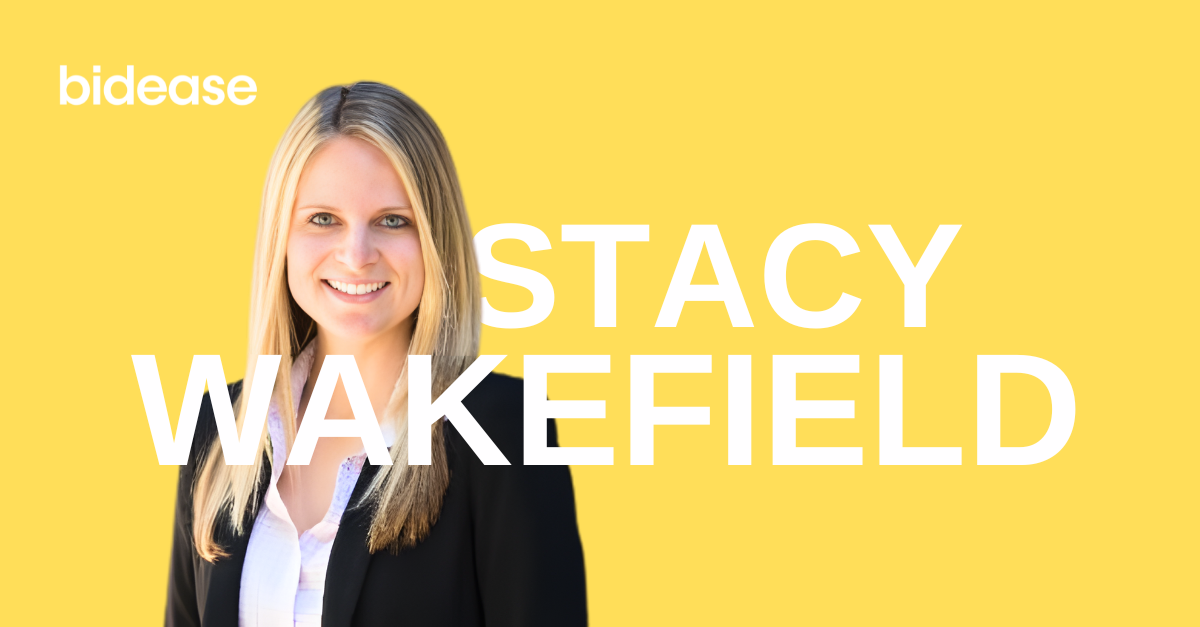
Stacy Wakefield is equal parts polished strategist and in-the-trenches operator. She’s been Senior Director of Product Marketing at SoFi, VP of Marketing at Joy, Chief Growth Officer at Sounding Board, and VP of Marketing at Credit Sesame – roles where she honed a playbook of customer-first positioning and relentless experimentation. Now, as a fractional growth strategist at her consultancy Regardful Growth, Wakefield thrives on juggling multiple early-stage companies and turning their chaos into scalable growth. Bidease sat down with her to learn more about her take on growth marketing strategy.
Watch the full interview below, or read on for a selection of key takeaways.
Key Takeaways
- Conduct "Jobs to Be Done" workshops to align your product’s positioning with the true motivations of your customers. Startups must look past their features to understand the specific “job” a user is hiring the product to perform.
- Establish a disciplined experimentation process that defines success metrics before launching any campaign. By treating every marketing initiative as a test, companies can achieve rapid learning and ensure they only scale tactics that have proven their ROI through data.
- Utilize AI tools as a strategic amplifier to increase productivity and enhance the quality of your marketing output. Wakefield views these technologies as experienced assistants that can handle content drafting and data analysis, allowing growth leaders to focus more of their time on high-level strategy.
From Fintech to Fractional
Wakefield’s career arc reads like a tour of financial technology and SaaS’s greatest hits, but it wasn’t all smooth sailing. Her most formative challenge came at Credit Sesame, where she led marketing. In the early days, the team was charging full-speed ahead – pushing features, launching campaigns – but something wasn’t clicking. Who exactly were their customers, and what did they really want? “We didn’t do that initially, but we realized a couple of years in that we needed to take a step back and understand them better,” Wakefield recalls. They hired experts to run a full-week Jobs to Be Done workshop, interviewing customers to unearth their true motivations. “It was really transformational in how we marketed the product,” she says. “We kind of thought people were coming to us for something very different than what we really uncovered by talking to a lot of customers,” Wakefield admits.
That foundational customer understanding became Wakefield’s north star. In fast-moving startups, it’s tempting to charge ahead, shipping features and blasting out ads, but she champions a more deliberate approach. “Founders have done a great job at building the product… and want to just go to market with that,” she notes. When she comes in as a growth lead, her first step is hitting the brakes and reframing the problem. Who is the customer? What problem do they need solved? “Let’s think first of who the customers are and what problems those people need solved, and how this product helps them solve that, rather than… ‘here’s what we have, just market that,’” she tells startup teams.
Building a Growth Playbook of Experiments and Insight
With that customer-centric foundation in place, Wakefield’s next act is all about experimentation. After leaving her in-house roles to “go out on my own and do the consulting thing,” she quickly learned that every startup comes with its own unique jigsaw puzzle of a challenge. One current client, for example, is a health-tech company in its very early stages. Wakefield has been guiding them through defining their target customers and positioning the product to resonate. “We’re working on their go-to-market strategy and just really helping them identify who their best customers are… and then how to most effectively position the product to those customers,” she explains.
Her approach with each company starts with a deep dive into the data (or sometimes the lack thereof). “I like to start from a place of, okay, let’s look at the data that you have and… any signals that we can get from customer conversations… and competitors,” she says of her onboarding process. She wants to know what’s been tried, what’s worked, and what hasn’t. Wakefield zeroes in on these opportunities and sketches out experiments to validate her hunches. Crucially, she insists on defining success up front: “being really clear on what it is that they’re trying to learn… what it is that they hope to get out of those experiments.”
Wakefield brings an insider playbook to each new engagement. In her toolkit, nothing is sacred and everything is a hypothesis to be proven. She’ll juggle Google Analytics data, customer interviews, and a barrage of A/B tests all at once, if that’s what it takes to get answers. Every early-stage company, she emphasizes, has to earn its growth through this kind of disciplined exploration. For those looking to replicate Wakefield’s success, her framework looks something like this:
- Nail the Positioning: First, clarify who your target customer is and align your message to their Jobs to Be Done – what job are they “hiring” your product for? Wakefield believes positioning must focus on the customer’s problem and emotion, not just your product’s features. This foundational step can make or break all later marketing efforts.
- Experiment Relentlessly: Treat every campaign or idea as a test with a clear hypothesis. From landing page A/B tests to tweaking email subject lines, Wakefield runs quick experiments to see what resonates. The goal is rapid learning. Figure out what works before pouring a budget into it.
- Prioritize Demand Gen: For resource-strapped startups, not every channel or tactic is worth pursuing. Wakefield helps founders determine where to focus their limited firepower. Sometimes that means leaning into a few high-potential demand gen channels and holding off on others, or deciding how to split efforts between marketing and direct sales. It’s all about maximizing impact with minimal waste.
- Leverage AI as Amplifier: Wakefield is quick to point out that today’s growth marketer has a superpower that didn’t exist a few years ago – AI tools. She uses ChatGPT (and is eyeing new entrants like Google’s Gemini) to speed up content drafts, brainstorming, and data analysis. The key, she says, is to use AI to enhance your work, not replace your strategic thinking. “These are tools that are so well designed for people that have a lot of experience to just do so much more, produce better quality work,” she notes. In her hands, AI is like an “experienced assistant” that boosts her productivity by an estimated 50%.
Unlocking Scalable Growth and Looking Ahead
At the end of the day, what makes Stacy Wakefield such an effective growth partner for startups is her mindset. She combines the insider know-how of someone who’s led marketing teams at scale with the agility of a consultant who parachutes into new situations and gets up to speed in a flash. She understands that growth doesn’t stall because a team lacks tactics, but because they misunderstand their customers.
Stacy Wakefield’s insider perspective – that old-school truths like customer insight and great positioning are more important than ever, even as new-school tech like AI changes how we execute – offers a compass for navigating what’s next. And through her work at Regardful Growth, she’s ensuring the next generation of startups not only hit their growth numbers, but build the marketing muscle memory to keep growing. In a word, she’s making herself indispensable by teaching companies to not need her someday.

Customer retention is the key
Lorem ipsum dolor sit amet, consectetur adipiscing elit lobortis arcu enim urna adipiscing praesent velit viverra sit semper lorem eu cursus vel hendrerit elementum morbi curabitur etiam nibh justo, lorem aliquet donec sed sit mi dignissim at ante massa mattis.
- Neque sodales ut etiam sit amet nisl purus non tellus orci ac auctor
- Adipiscing elit ut aliquam purus sit amet viverra suspendisse potent
- Mauris commodo quis imperdiet massa tincidunt nunc pulvinar
- Excepteur sint occaecat cupidatat non proident sunt in culpa qui officia
What are the most relevant factors to consider?
Vitae congue eu consequat ac felis placerat vestibulum lectus mauris ultrices cursus sit amet dictum sit amet justo donec enim diam porttitor lacus luctus accumsan tortor posuere praesent tristique magna sit amet purus gravida quis blandit turpis.

Don’t overspend on growth marketing without good retention rates
At risus viverra adipiscing at in tellus integer feugiat nisl pretium fusce id velit ut tortor sagittis orci a scelerisque purus semper eget at lectus urna duis convallis porta nibh venenatis cras sed felis eget neque laoreet suspendisse interdum consectetur libero id faucibus nisl donec pretium vulputate sapien nec sagittis aliquam nunc lobortis mattis aliquam faucibus purus in.
- Neque sodales ut etiam sit amet nisl purus non tellus orci ac auctor
- Adipiscing elit ut aliquam purus sit amet viverra suspendisse potenti
- Mauris commodo quis imperdiet massa tincidunt nunc pulvinar
- Adipiscing elit ut aliquam purus sit amet viverra suspendisse potenti
What’s the ideal customer retention rate?
Nisi quis eleifend quam adipiscing vitae aliquet bibendum enim facilisis gravida neque euismod in pellentesque massa placerat volutpat lacus laoreet non curabitur gravida odio aenean sed adipiscing diam donec adipiscing tristique risus amet est placerat in egestas erat.
“Lorem ipsum dolor sit amet, consectetur adipiscing elit, sed do eiusmod tempor incididunt ut labore et dolore magna aliqua enim ad minim veniam.”
Next steps to increase your customer retention
Eget lorem dolor sed viverra ipsum nunc aliquet bibendum felis donec et odio pellentesque diam volutpat commodo sed egestas aliquam sem fringilla ut morbi tincidunt augue interdum velit euismod eu tincidunt tortor aliquam nulla facilisi aenean sed adipiscing diam donec adipiscing ut lectus arcu bibendum at varius vel pharetra nibh venenatis cras sed felis eget.
Related articles
Browse all articles


Let's Talk
We're Here to Help
Start your free consultation today. Create a custom growth strategy with a Bidease specialist.