
Lauren Farber on AI in Practice: Moving Beyond the Hype

Disclaimer: The opinions represented here are those of the individual and do not necessarily represent those of their current or former employer.
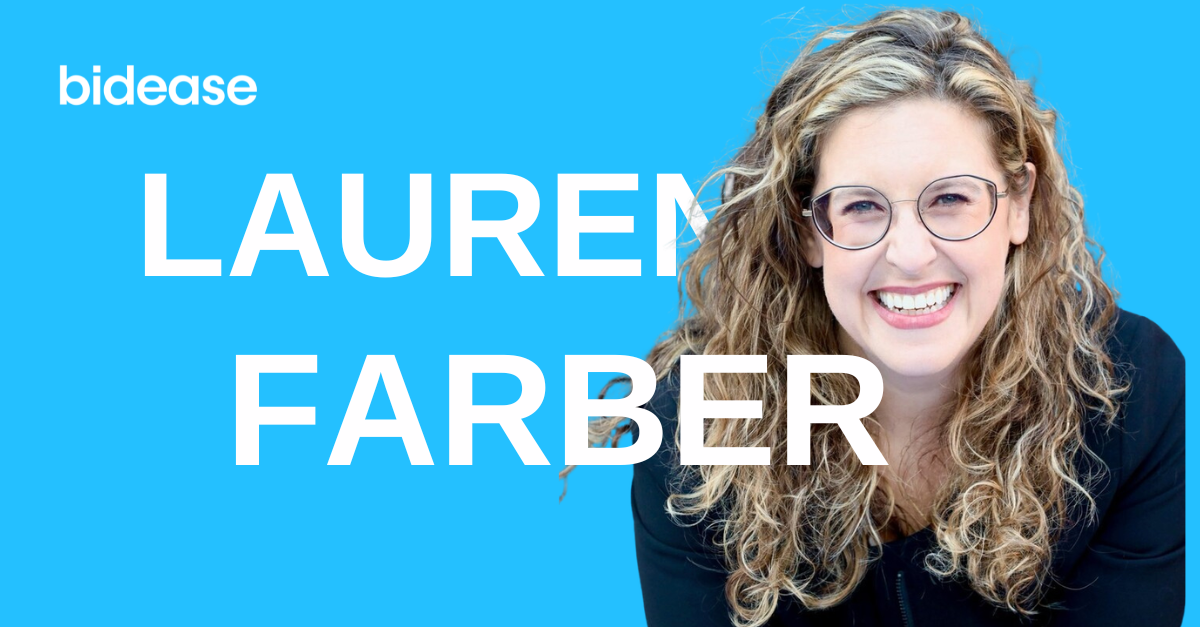
Lauren Farber, Co-founder and COO of Autovera, has built her career in the part of the business most people only notice when it breaks: the operational layer that turns sales ambition into executed campaigns, invoices, and actual cash. In this episode of the Just One Thing podcast, she frames AI not as a replacement for enterprise tools, but as a new interface on top of them—powerful, imperfect, and only transformative when paired with disciplined process, clean data, and clear guardrails.
Before we dive into the breakdown, make sure to subscribe and follow the Just One Thing podcast for more conversations with the operators shaping the future of the industry.
Key Takeaways
- Treat AI as a sophisticated interface layer rather than a complete replacement for systems. It streamlines how teams interact with complex data while keeping your core backend infrastructure intact.
- Map out your internal workflows to eliminate the confusion of the operational black box. Translating technical processes into clear business goals ensures that you can pinpoint exactly where margin leakage occurs.
- Prioritize simple and impactful wins before attempting to automate your most complex business challenges. Starting small builds the necessary internal trust and governance required to scale sophisticated agentic solutions safely.
- Invest in human relationships and community presence to differentiate your brand from generic outputs. As AI compresses the cost of content, personal trust becomes the ultimate filter for enterprise-level decision making.
- Build systems that are consistently repeatable instead of relying on one-off clever prompt engineering. True operational success is found when a process can run a thousand times without requiring human intervention.
Betting on the Backend: When Operations Becomes the Product
Lauren Farber’s career began in B2B print media planning, doing foundational work like placing ads in dental-office magazines. Since then, she’s moved through leadership roles at AOL, Hulu, Disney, and Netflix, driven by a singular instinct: “I’m a systems maven. I love how things work.”
But Lauren’s mantra is far from a simple tagline. The moment Lauren hears about a business problem, she starts pulling it apart. She looks for where the workflow stalls, which handoffs create errors, and which “rules” exist only because no one has had the time to redesign them.
If you’ve ever watched a company grow and felt a subtle dread as more revenue brought more chaos, you understand her world. The modern media stack is a patchwork of tools and exceptions. When leadership can’t explain why things feel so hard, operations becomes what Lauren calls a “black box.”
Now that AI has arrived, the "black box" feels even stranger. While Lauren is an active experimenter, she is quick to name the operational reality. Because you can literally do anything with AI, the real work is choosing where to start.
The AI Interface: Working with the "Baseline Worker"
Farber views AI as the new "front end" for enterprise tools. She doesn't believe AI will eliminate roles; rather, it will become a "baseline worker" or a ubiquitous assistant—one agent for every human worker. This shift moves the goalposts for everyone. Because the knowledge base is now accessible to anyone who knows how to ask the right questions, the real work now lies in the "Human-in-the-Loop" model.
AI can accelerate the journey from concept to execution, but a human still has to define the guardrails, provide the context of why a business is unique, and catch the inevitable hallucinations. We still need to put the systems in place and tell the machine who our target audiences are, otherwise, the output remains generic and undifferentiated.
Lauren’s approach is consistent: Audit the workflow until it becomes clean enough to automate. She predicts that enterprise platforms like Salesforce or The Trade Desk won't disappear; they’ll simply recede into the background. AI will become the interface layer. Instead of "working the tools," we will "work through the interface" while the tools become invisible infrastructure. To do this responsibly, she offers a rule that sounds obvious but is rarely followed: In an impact versus simple situation, start with simple. Don't start with the highest-stakes project, or the complexity will crush you before you gain momentum.
Operational Instincts
Farber doesn’t present these insights as "marketing tips"; she presents them as workflow optimizations where marketing is simply the consequence. It starts with a fundamental shift in content strategy: we must optimize to be cited, not just found. This means producing authoritative white papers and thought leadership specifically designed for LLMs to ingest. When a model quotes you as a source, you’ve secured the modern version of "making the short list" before a human researcher even clicks a link.
Because AI-generated outputs are becoming increasingly generic, the value of human relationships has skyrocketed, turning conferences back into essential pipeline infrastructure. In Lauren’s view, high-density, meeting-heavy events are where the trust is built that AI simply cannot replicate. While you are building that trust in person, you can use those same models as a positioning mirror. By asking an LLM to look up your brand, create customer personas, and identify gaps, you turn brand research from a massive annual project into a ten-minute daily habit.
Of course, a clever prompt is just a toy until it is integrated into the rest of the business. Lauren emphasizes that the real advantage comes when you operationalize the "magic" by ensuring that if an AI tool sorts your event registrants, those results are plugged directly into your CRM for immediate lead assignment and marketing automation. Finally, she advocates for multi-model QA as the new standard for peer review. Especially when money is involved, pitting models against each other allows "truth" to emerge through triangulation, catching the subtle attribution errors that a single model might confidently overlook.
Repeatability is Reality
Lauren’s story is a quiet rebuttal to AI panic. Jobs aren't disappearing; they are reorganizing around a new baseline where humans shift into supervisory and contextual roles. Transformation is a craft, not a slogan. While she gets excited about new tools, her central question remains: "Can we run this twice?" AI doesn’t reward the teams that move the fastest; it rewards the teams that build the cleanest systems and then let speed happen as a byproduct.
If you’re ready to stop fighting your tools and start scaling your performance with a partner who speaks the language of the agentic future, reach out to Bidease. Let’s turn your operational black box into a clear path for growth.

Customer retention is the key
Lorem ipsum dolor sit amet, consectetur adipiscing elit lobortis arcu enim urna adipiscing praesent velit viverra sit semper lorem eu cursus vel hendrerit elementum morbi curabitur etiam nibh justo, lorem aliquet donec sed sit mi dignissim at ante massa mattis.
- Neque sodales ut etiam sit amet nisl purus non tellus orci ac auctor
- Adipiscing elit ut aliquam purus sit amet viverra suspendisse potent
- Mauris commodo quis imperdiet massa tincidunt nunc pulvinar
- Excepteur sint occaecat cupidatat non proident sunt in culpa qui officia
What are the most relevant factors to consider?
Vitae congue eu consequat ac felis placerat vestibulum lectus mauris ultrices cursus sit amet dictum sit amet justo donec enim diam porttitor lacus luctus accumsan tortor posuere praesent tristique magna sit amet purus gravida quis blandit turpis.

Don’t overspend on growth marketing without good retention rates
At risus viverra adipiscing at in tellus integer feugiat nisl pretium fusce id velit ut tortor sagittis orci a scelerisque purus semper eget at lectus urna duis convallis porta nibh venenatis cras sed felis eget neque laoreet suspendisse interdum consectetur libero id faucibus nisl donec pretium vulputate sapien nec sagittis aliquam nunc lobortis mattis aliquam faucibus purus in.
- Neque sodales ut etiam sit amet nisl purus non tellus orci ac auctor
- Adipiscing elit ut aliquam purus sit amet viverra suspendisse potenti
- Mauris commodo quis imperdiet massa tincidunt nunc pulvinar
- Adipiscing elit ut aliquam purus sit amet viverra suspendisse potenti
What’s the ideal customer retention rate?
Nisi quis eleifend quam adipiscing vitae aliquet bibendum enim facilisis gravida neque euismod in pellentesque massa placerat volutpat lacus laoreet non curabitur gravida odio aenean sed adipiscing diam donec adipiscing tristique risus amet est placerat in egestas erat.
“Lorem ipsum dolor sit amet, consectetur adipiscing elit, sed do eiusmod tempor incididunt ut labore et dolore magna aliqua enim ad minim veniam.”
Next steps to increase your customer retention
Eget lorem dolor sed viverra ipsum nunc aliquet bibendum felis donec et odio pellentesque diam volutpat commodo sed egestas aliquam sem fringilla ut morbi tincidunt augue interdum velit euismod eu tincidunt tortor aliquam nulla facilisi aenean sed adipiscing diam donec adipiscing ut lectus arcu bibendum at varius vel pharetra nibh venenatis cras sed felis eget.
Related articles
Browse all articles
Let's Talk
We're Here to Help
Start your free consultation today. Create a custom growth strategy with a Bidease specialist.